On this page
The US Federal Communications Commission (FCC) on Wednesday 25 November 2026 authorised SpaceX to deploy up to 1 million satellites as orbital data centres, a constellation it calls Starmind. The decision, reported by NPR and others on 26 November, is the strongest sign yet that regulators will let the SpaceX 1 million satellites plan proceed. Scientists and rival operators are openly sceptical that it can be built, and astronomers say it threatens the night sky.
What did the FCC actually approve?
The FCC's Space Bureau granted in part and deferred in part the application from Space Exploration Holdings LLC (SpaceX). SpaceX filed it on 30 January 2026 and the FCC accepted it for filing on 4 February 2026.
The order covers a non-geostationary system of 1,000,000 satellites acting as orbital data centres. Shells would sit between 500 km and 1,002 km above Earth. Primary communications would use optical links, with Ka-band radio only for backup and emergency telemetry, tracking and command.
FCC Chairman Brendan Carr said the action "opens a bold new frontier for the computing infrastructure needed to power America's leadership and growth", according to Fox Business. CNBC reported that Elon Musk replied on X: "Much appreciated. This will be a great asset to America and the world."
What are the conditions and deadlines?
Approval is not a licence to launch a million satellites tomorrow. The order sets milestones, and the authorisation becomes null and void if they are missed:
| Milestone | Deadline |
|---|---|
| One satellite deployed and operating | 25 November 2033 |
| 10% of the maximum | 25 November 2035 |
| 50% of the maximum | 25 November 2038 |
| Full constellation | 25 November 2040 |
Other terms in the FCC order include:
- A 15-year licence term, starting when SpaceX certifies the first satellite is operating.
- Satellites operating below 600 km were found to comply with the debris mitigation rules. For anything above 600 km, SpaceX must file a final debris mitigation plan first, and the request to dispose of satellites above 600 km into other orbits is deferred.
- Twice-yearly reports covering conjunction events, satellites removed from operation, re-entries and the total deployed.
- Ka-band use is unprotected and must not cause harmful interference. SpaceX has 30 days to decline the grant as conditioned; silence counts as acceptance.
The FCC also denied the petitions to deny filed by Viasat, Amazon's Kuiper Systems (Amazon Leo) and the American Astronomical Society (AAS), and said no further National Environmental Policy Act review was required.
Why are scientists sceptical?
NPR's coverage, republished by KUAF, quotes astrophysicist and author Adam Becker calling the plan "a fantasy" and saying "It's not going to happen." His central objection is physics: space is a vacuum, so heat is hard to shed, which creates what he calls basic physical limits. Spreading the load over many smaller satellites could help, he says, but would be expensive and difficult.
The concerns raised in the reporting fall into four groups:
- Debris: a collision could seed a debris cloud in low Earth orbit, where weather and telecommunications satellites operate.
- Atmosphere: pollution from launches and re-entries.
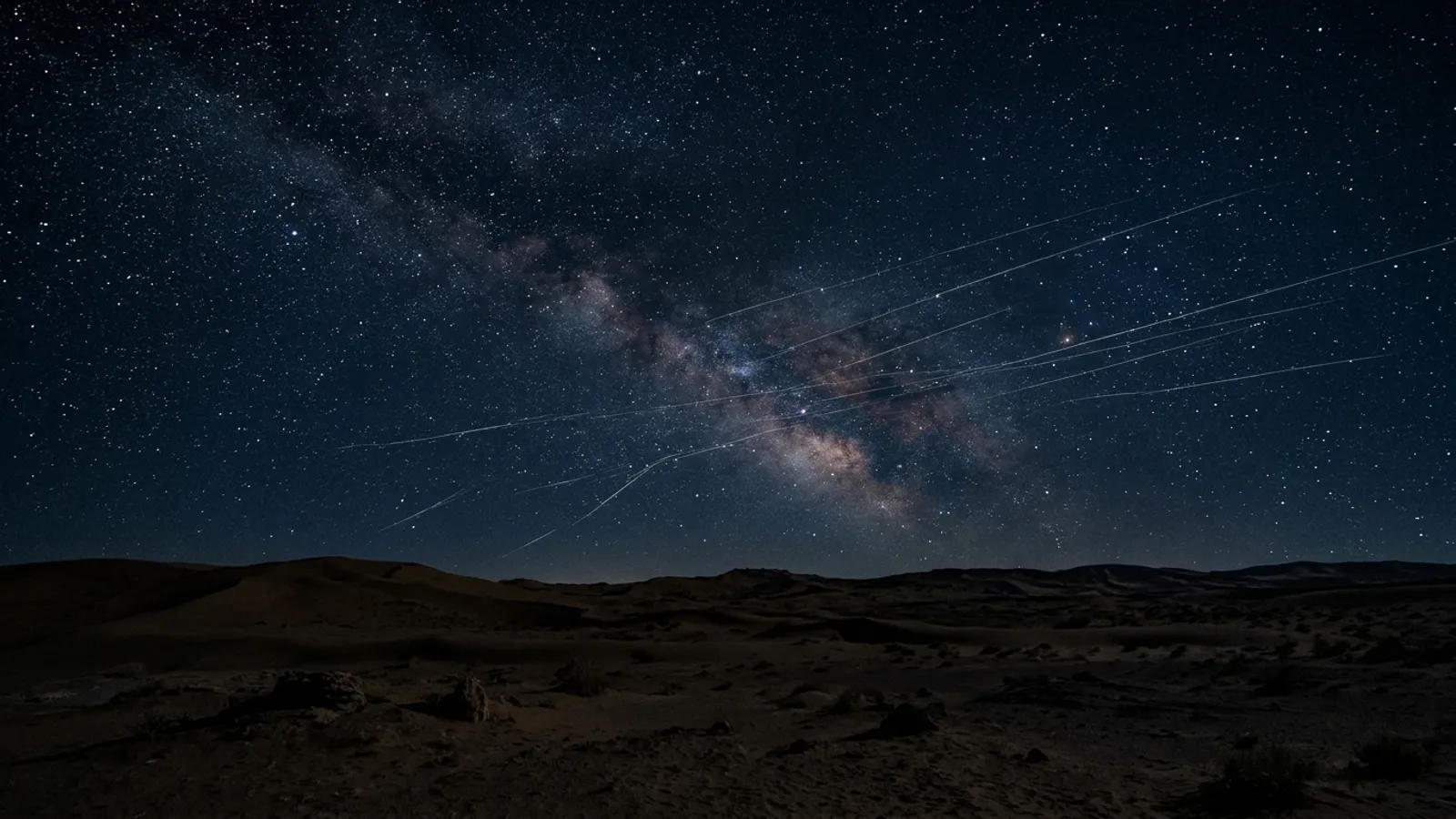
- Astronomy: the AAS said it was "disheartened and dismayed", arguing the satellites would be larger, brighter and more numerous, and so visible for longer.
- Feasibility: Amazon's March petition called Starmind a "lofty ambition rather than a real plan", and said building it would take SpaceX "centuries", according to CNBC.
Earthjustice senior attorney Jan Hasselman criticised the timing, in a holiday week, and said the project was approved without the environmental review he believes the law requires. The FCC said it set aside issues over which it has no authority, including environmental concerns.
How big is a million satellites?
Fox Business puts the number of satellites currently in space at about 17,000, and says Starlink has just over 11,000 in orbit. Other outlets give slightly different Starlink totals, so treat these as approximate. Either way, the grant is nearly two orders of magnitude beyond today's largest constellation.
The FCC order says nothing on the physical size of each satellite, and we have not found a confirmed figure, so we do not give one. Readers searching for how big SpaceX satellites are will not find it in the decision.
Analysis: what this decision does and does not tell us
This section is our analysis, not reporting.
The approval is a regulatory milestone, not an engineering one. The first deadline is seven years away, and nothing in the order forces SpaceX to launch all 1 million. CNBC notes that operators sometimes request more than they plan to launch to keep design flexibility, and that the plan depends heavily on lower launch costs from Starship, which is still under development.
The deferred altitude question matters most. Until SpaceX files a final debris plan, the higher shells above 600 km cannot be used, so the debris argument is not settled, only postponed.
The decision also fits a wider race. CNBC reports that Google's Project Suncatcher launched its first AI chips into orbit in October, and that Blue Origin asked the FCC in March for up to 51,600 satellites for its Project Sunrise constellation. For UK readers, the effects would be indirect: night-sky visibility and orbital safety are global. We have covered related space-security stories, such as Nato's pledge on space defence, and SpaceX's consumer side in our guide to Starlink Mini 2.
Sources
FAQ
Frequently asked questions
Yes, in part. On 25 November 2026 the FCC's Space Bureau granted the application in part and deferred part of it, including the request to dispose of satellites above 600 km. SpaceX has 30 days to decline the grant as conditioned.
The order requires one satellite operating by 25 November 2033, 10% of the maximum by 2035, 50% by 2038 and the full constellation by 25 November 2040, or the authorisation lapses.
Starmind is the name of SpaceX's orbital data centre constellation, which uses solar-powered satellites to process data for use on Earth. Fox Business describes the aim as avoiding terrestrial limits on power, land and cooling.
Viasat, Amazon's Kuiper Systems (Amazon Leo) and the American Astronomical Society asked the FCC to deny the application. The FCC denied their petitions.
That is unclear. The authorisation sets a maximum, not a requirement, and critics including Adam Becker doubt it is achievable. SpaceX did not respond to CNBC's request for comment.
Spotted an error? Tell us. Read how we report and correct stories in our editorial policy.
Written by
Mainstream Tech
Newsroom
News and analysis on technology, AI, business, politics and international affairs, from our newsroom in London.
More from Mainstream