On this page
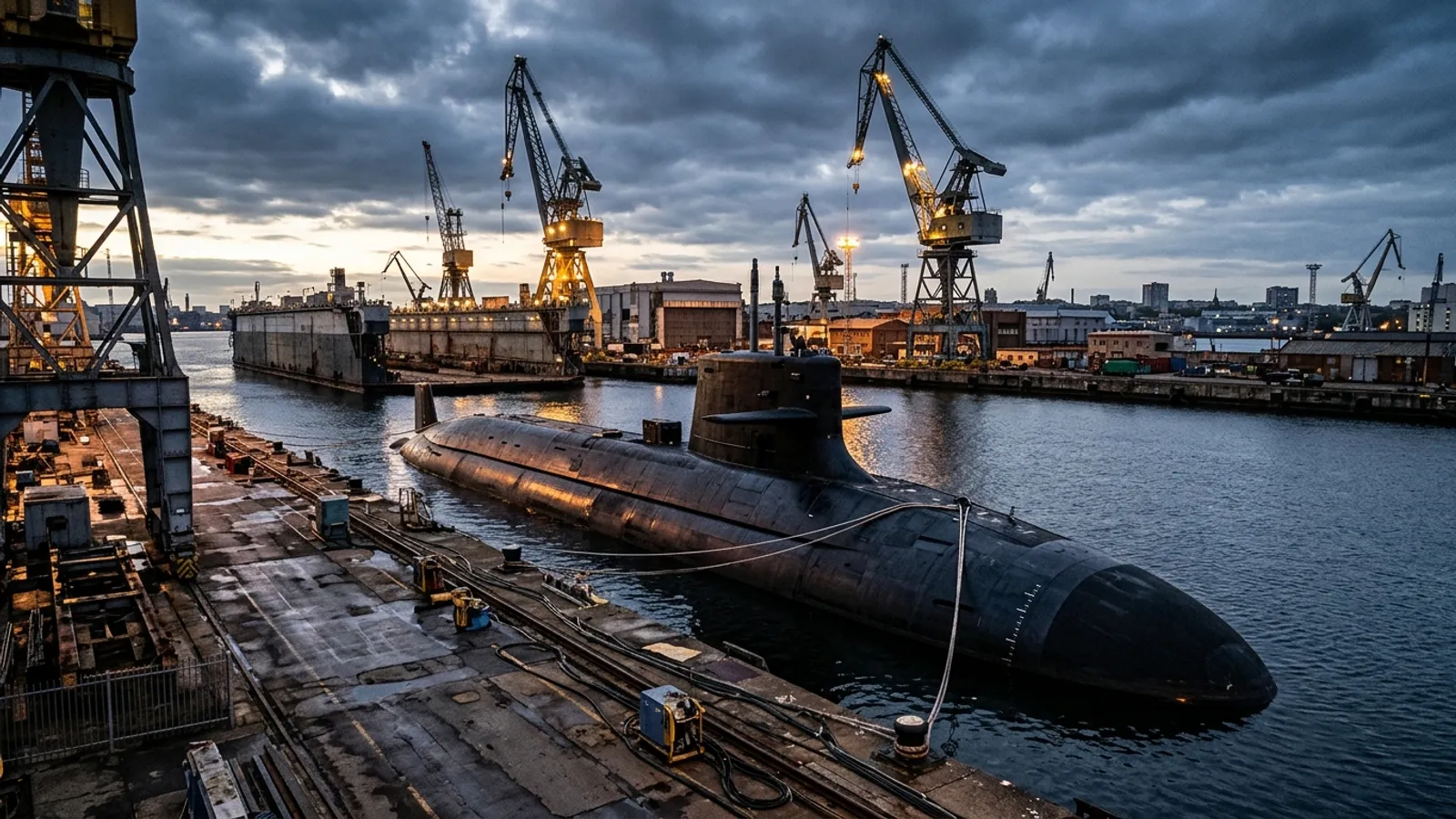
The Ministry of Defence has signed an £8.7 billion deal with Babcock International to keep the Royal Navy's submarines maintained, in what Babcock calls the largest contract in its history. The company announced the Babcock submarine contract on 26 November 2026. Called the Gateway Agreement, it starts on 1 December 2026, the day after the previous arrangement runs out.
What is the Babcock Gateway Agreement?
The Gateway Agreement is a long-term submarine services framework between Babcock and the MoD. Per Babcock's announcement, it evolves the Future Maritime Support Programme (FMSP), whose extension ends on 30 November 2026.
It brings submarine support, maintenance, technical services and naval base services into a single integrated contract. Babcock says it supports the Continuous At Sea Deterrent and the move from the Vanguard class to the Dreadnought class of submarines.
| Detail | What has been announced |
|---|---|
| Parties | Babcock International Group and the Ministry of Defence |
| Headline value | £8.7 billion |
| Breakdown | £8 billion in contract backlog plus £0.7 billion under a framework |
| Initial term | Five years from 1 December 2026 |
| Possible length | Up to 15 years in aggregate |
| Sites named | HMNB Devonport, Devonport Dockyard and HMNB Clyde |
Navy Lookout's report gives the same figures and says the FMSP was due to expire at the end of November after several short-term extensions. A separate Memorandum of Understanding sets out the longer-term strategic relationship.
How is the £8.7bn made up?
The headline number is not all firm work. Babcock says £8 billion goes into its contract backlog, while £700 million sits under a framework. Babcock's announcement does not say how much of the £0.7 billion will be called off.
The five-year term is the firm part. The 15-year figure is a potential aggregate term, not a commitment.
What does it mean for jobs and Devonport?
Babcock says the agreement will:
- safeguard 8,500 existing nuclear defence jobs;
- create 3,000 new full-time roles;
- support more than 2,500 apprentice and graduate opportunities over five years;
- generate more than £500 million of social value for communities across the UK.
These are Babcock's figures. The company also links the deal to wider investment, including Project Royal Oak, the Clyde Transformation Plan, a Babcock Skills Centre at Devonport and an Integrated Logistics Hub. Navy Lookout lists the same projects as complementary to the agreement. The Devonport and Clyde sites are the bases the agreement names.
What did ministers and Babcock say?
Prime Minister Andy Burnham said: "Keeping the public safe will always be my top priority," according to Babcock's release. The Market Reporter quotes Defence Secretary Wes Streeting as saying "The deterrent is only as strong as our ability to keep it at sea." Babcock chief executive Harry Holt said the company is "very proud" of the support it provides to the Royal Navy.
AOL's report adds that Babcock's contract backlog stood at £8.9 billion at its half-year, with revenue up to £2.7 billion from £2.5 billion a year earlier. Those figures pre-date the new agreement.
Analysis: why the timing matters
This section is our analysis, not reported fact.
The most visible change is certainty. Navy Lookout describes the previous position as a series of short-term extensions and calls five years of assured work a substantial improvement. Nuclear engineers take years to train, so a longer horizon should make recruitment and supply-chain planning easier for Babcock and its suppliers.
The harder test is availability. The MoD has framed the deal around getting submarines out of dock and back to sea faster. A bigger contract does not by itself shorten refits. The measure will be whether more boats are ready for operations, which only time and published figures will show. The agreement also lands amid heavy defence and security news, as in our coverage of Nato's response to reports of a Russian nuclear satellite.
Sources
FAQ
Frequently asked questions
The headline value is £8.7 billion, made up of £8 billion in contract backlog and £0.7 billion under a framework, according to Babcock.
It starts on 1 December 2026 and runs for five years, with a potential aggregate term of up to 15 years.
Babcock names HMNB Devonport, Devonport Dockyard and HMNB Clyde.
It evolves the Future Maritime Support Programme, whose extension ends on 30 November 2026.
Spotted an error? Tell us. Read how we report and correct stories in our editorial policy.
Written by
Mainstream Tech
Newsroom
News and analysis on technology, AI, business, politics and international affairs, from our newsroom in London.
More from Mainstream