On this page
Blue Origin has moved the return of its New Glenn rocket to January 2027, according to an internal memo from chief executive Dave Limp that was first reported by the Financial Times in the week of 2 November 2026. The company had said it would fly again before the end of the year.
What has Blue Origin delayed, and why?
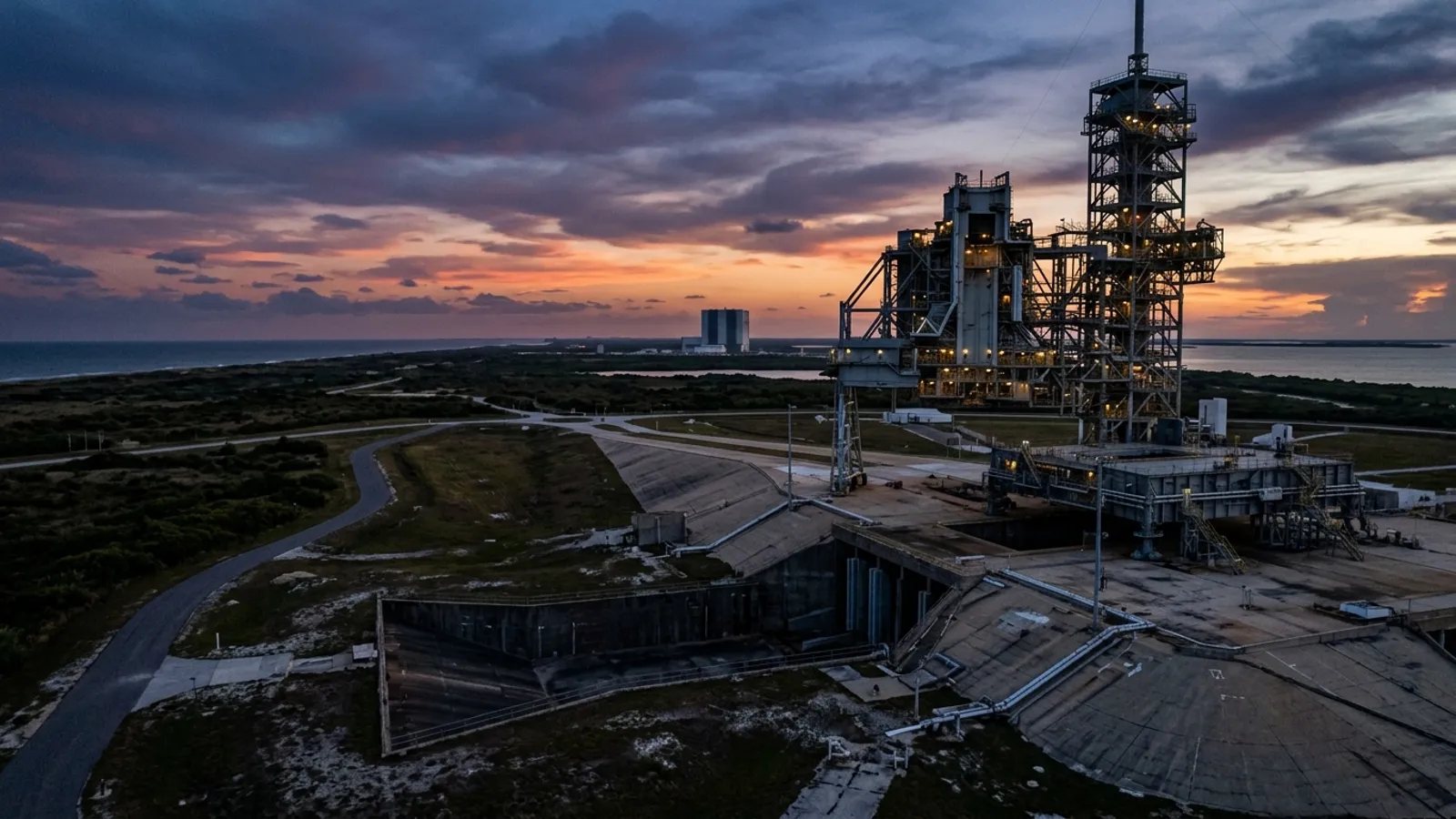
Blue Origin has pushed New Glenn's next launch from late 2026 to January 2027 because rebuilding its only New Glenn launch pad in Florida has taken longer than planned. Limp's memo blames weather, including a wet summer and recent flash floods. The company has not given an exact January date or confirmed which payload will fly first.
What does the memo say?
The first report came from the Financial Times, and other outlets then described the memo. The Register, which says it viewed the memo, quotes Limp as writing: "We're proactively updating our anticipated launch date to January 2027." The same article says the team "found and fixed the issue that caused the anomaly", without giving details.
Engadget, dated 5 November 2026, reports that the memo says the Vehicle Access Tower has been repaired and restacked and the launch bridge restored. It also says Limp blamed weather for slower progress than hoped. Silicon UK adds that Limp wrote the adjustment "doesn't diminish what we've accomplished" and that returning New Glenn to flight "remains our top priority".
Blue Origin declined to comment on the reports, according to The Next Web, which cites Bloomberg's reading of the memo.
What went wrong in May 2026?
New Glenn exploded during an engine hot-fire test at Cape Canaveral in May 2026. The Next Web puts the date at 28 May and says the blast destroyed the rocket and badly damaged the company's only New Glenn pad. Silicon UK says an engine valve failed during the test.
In more detail, The Register says Limp stated in August that the problem "originated at the main oxygen valve on one of the BE-4 engines" and that existing engines would need retrofitting. He did not explain how the valve failed. That is Blue Origin's own account, and we have not seen an independent investigation report.
How the schedule has moved
| When | What was said or happened | Source |
|---|---|---|
| May 2026 | New Glenn explodes during a hot-fire test and damages the pad | The Register, The Next Web |
| June 2026 | Limp says the company still plans to fly again in 2026 | The Register |
| October 2026 | Jeff Bezos tells Fox News a December flight is still expected | Investing.com |
| Early November 2026 | Memo moves the target to January 2027 | The Register, Engadget |
Investing.com, citing CNBC's coverage of the memo, says Limp acknowledged the rebuild "hasn't been easy".
Who is affected: Amazon Leo and NASA's Artemis plans
The launch that was due to fly after the explosion was set to carry 48 satellites for Amazon's Leo internet constellation, according to Silicon UK and The Next Web. Silicon UK reports that Amazon is looking at other providers, including United Launch Alliance and Arianespace. The Next Web adds that the US regulator has already reduced Amazon's spectrum priority for satellites launched late.
NASA is the other pressure point. The Register says the delay leaves less margin before NASA's Artemis III demonstration mission next year, which involves lunar technology from both Blue Origin and SpaceX. The Next Web says New Glenn is meant to launch the Blue Moon lander that NASA plans to use to land astronauts on the Moon. Investing.com notes that Blue Origin holds several NASA Artemis contracts, including one for a lunar lander.
What is Blue Origin still building?
The Register reports that Blue Origin has described a new Northstar booster engine with half the parts and 30% less mass than the BE-4, and thrust rising from 640,000 to 715,000 pounds-force. Those are the company's claims. Investing.com says that in October Blue Origin announced investment in its Florida facilities, aimed at multiple flights per week by the end of the decade.
Analysis: what the slip tells us
This section is our own reading, not reporting.
The delay is small against a six-month rebuild, but it matters because the target was public. Limp said in June that New Glenn would fly in 2026, and Bezos repeated a December expectation in October. Another miss weakens confidence in near-term dates, so treat "January" as a goal rather than a commitment until a launch date and payload are announced.
The commercial pressure is real too. A satellite operator such as Amazon needs launches on a fixed timetable, and The Next Web says New Glenn has flown only three times since January 2025. Rivals in satellite broadband already have large fleets in orbit, a market we touched on in our piece on the Starlink Mini 2.
On funding, The Next Web reports that Blue Origin took outside investment for the first time in July at a $130bn valuation. Treat that figure as reported, not confirmed by the company. It is the kind of capital story we covered for Fractile's Series C, though in a very different industry.
For a space milestone with a fixed date, Voyager 1 reaches one light-day from Earth on 18 November 2026.
Sources
- Silicon UK: Blue Origin delays New Glenn's next launch to early 2027
- Engadget: Blue Origin's New Glenn launch delay will continue into 2027
- The Register: Blue Origin unveils more thrust, less haste as New Glenn slips to 2027
- Investing.com: Blue Origin delays New Glenn launches to January 2027
- The Next Web: Blue Origin delays New Glenn's return to flight to January 2027
FAQ
Frequently asked questions
Blue Origin's memo targets January 2027, but no exact date has been announced. The company had previously said it would return to flight before the end of 2026.
Reports say reconstruction of the Cape Canaveral launch pad ran late, with poor summer weather and flash floods named in the memo. The pad was damaged when the rocket exploded during a test in May 2026.
Blue Origin has said the problem originated at the main oxygen valve on one of the BE-4 engines, according to The Register's account of Limp's August statement. The company has not published how the valve failed.
Yes, according to the reports. The next flight was due to carry 48 Amazon Leo satellites, and The Register says the slip leaves less margin before NASA's Artemis III mission next year.
Spotted an error? Tell us. Read how we report and correct stories in our editorial policy.
Written by
Mainstream Tech
Newsroom
News and analysis on technology, AI, business, politics and international affairs, from our newsroom in London.
More from Mainstream