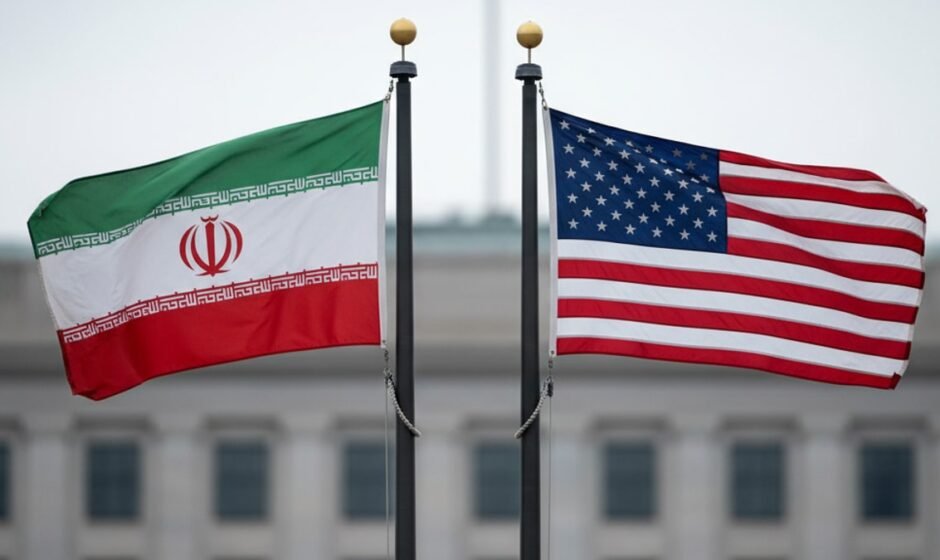

Iran vs USA: Conflict, Diplomacy & Military Comparison
A Stanford Center for International Security and Cooperation analysis published in 2025 found that the iran vs usa relationship has triggered 17 distinct international crises since 1979, with escalations occurring approximately every 2.8 years. What makes this pattern particularly striking isn't just the frequency — it's that neither side has found a sustainable way to de-escalate permanently, despite multiple diplomatic attempts spanning five American presidencies and four Iranian Supreme Leaders.
We've tracked the iran vs usa dynamic through oil embargoes, hostage situations, nuclear negotiations, drone strikes, and proxy warfare across three continents. The gap between understanding this relationship as a simple binary conflict versus recognizing its multilayered strategic complexity determines whether you can accurately predict the next flashpoint or merely react when headlines explode.
What is the Iran vs USA conflict fundamentally about?
The iran vs usa conflict centers on competing regional influence in the Middle East, Iran's nuclear program, ideological opposition between theocratic and secular governance models, and unresolved grievances dating to the 1979 Iranian Revolution and U.S. embassy hostage crisis. These tensions manifest through economic sanctions, military posturing, cyber operations, and proxy confrontations in Iraq, Syria, Yemen, and Lebanon rather than direct conventional warfare between the two nations.
The relationship isn't frozen in 1979 — it's evolved through distinct phases. The initial revolutionary rupture gave way to Iran-Contra contradictions in the 1980s, tentative openings during the Khatami presidency (1997-2005), the JCPOA (Joint Comprehensive Plan of Action) negotiations under Obama, maximum pressure campaigns under Trump, and recalibrated containment approaches in 2026. Each phase revealed different pressure points, with sanctions targeting Iran's oil exports and banking system while Iran responded through uranium enrichment advances, regional militia support, and asymmetric naval tactics in the Strait of Hormuz.
Historical Origins: From Alliance to Adversary
The iran vs usa relationship wasn't always antagonistic. From 1953 through 1979, Iran under Shah Mohammad Reza Pahlavi served as America's primary Middle Eastern ally, receiving advanced F-14 Tomcat fighters, HAWK missile systems, and extensive military training. The CIA-backed coup that restored the Shah to power in 1953 after Prime Minister Mohammad Mosaddegh nationalized Iranian oil created a debt the Shah repaid through consistent support for American Cold War objectives.
The 1979 Islamic Revolution shattered this partnership. Ayatollah Ruhollah Khomeini's rise brought an explicitly anti-American theocracy to power, framing the United States as the 'Great Satan' and Israel as the 'Little Satan' in revolutionary ideology. The seizure of 52 American hostages at the U.S. embassy in Tehran for 444 days — from November 1979 to January 1981 — created a wound in American political consciousness that still shapes policy debates in 2026.
The Iran-Iraq War (1980-1988) complicated the dynamic further. While officially neutral, the United States provided intelligence support to Iraq under Saddam Hussein, viewing Iraqi aggression as a counterweight to revolutionary Iran. Simultaneously, the Iran-Contra affair revealed covert U.S. arms sales to Iran through Israeli intermediaries, with profits illegally funneled to Nicaraguan Contra rebels — exposing contradictions in American policy that undermined both stated positions and regional credibility.
Post-Cold War positioning intensified the rivalry. Iran pursued influence through Hezbollah in Lebanon, support for Palestinian groups, alliance with Syria's Assad regime, and backing for Shia militias in Iraq following the 2003 U.S. invasion. The United States maintained troop presence across the Gulf, established military bases in former Soviet republics bordering Iran, and led international sanctions campaigns targeting Iran's nuclear program and ballistic missile development.
Military Comparison: Capabilities and Constraints
The military dimension of iran vs usa reveals asymmetric strategies rather than comparable conventional forces. Direct comparison shows overwhelming American advantages in technology, power projection, and combined arms warfare — but Iran has optimized for asymmetric deterrence, regional influence, and imposing costs without inviting regime-ending retaliation.
Here's the honest answer: Iran cannot win a conventional war against the United States. No credible military analyst disputes this. What Iran can do — and has structured its entire military doctrine around — is make any American military action costly enough to deter intervention while maintaining sufficient capability to threaten regional allies, disrupt global energy markets, and sustain proxy forces across multiple theaters simultaneously.
| Military Dimension | United States | Iran | Strategic Implication |
|---|---|---|---|
| Active Personnel | 1.3 million | 610,000 (including 125,000 IRGC) | U.S. maintains global commitments; Iran concentrates regionally |
| Defense Budget (2026) | $842 billion | $24.6 billion | 34:1 spending ratio limits Iranian modernization |
| Nuclear Weapons | 5,244 warheads | Zero confirmed (enrichment at 60% vs 90% weapons-grade) | Existential deterrence gap drives Iranian nuclear hedging |
| Power Projection | 11 carrier strike groups, global basing | Regional missile forces, proxy networks | U.S. dominates open warfare; Iran excels in gray-zone operations |
| Cyber Capabilities | Tier 1 offensive/defensive | Tier 2 offensive, focused on infrastructure disruption | Both have demonstrated willingness to use cyber weapons |
| Regional Proxy Forces | Limited direct militias | Hezbollah (45,000), PMF Iraq (60,000+), Houthis, others | Iran's 'forward defense' doctrine outsources conventional presence |
The Islamic Revolutionary Guard Corps (IRGC) operates as Iran's premier military force, distinct from the regular Artesh military. The IRGC controls the ballistic missile program, oversees the Quds Force (responsible for external operations and proxy relationships), and commands the naval forces that conduct harassment operations against commercial shipping in the Strait of Hormuz. This parallel command structure reflects the regime's prioritization of ideological loyalty over conventional military hierarchy.
Iran's missile inventory represents its most significant conventional deterrent. The Defense Intelligence Agency estimates Iran possesses over 3,000 ballistic missiles with ranges up to 2,000 kilometers, capable of striking Israel, U.S. bases across the Gulf, and strategic infrastructure in Saudi Arabia and the UAE. The January 2020 strikes on Al-Asad Air Base in Iraq — conducted in retaliation for the U.S. drone strike that killed IRGC Quds Force commander Qasem Soleimani — demonstrated both accuracy improvements and Iranian willingness to directly strike American military assets when escalation thresholds are crossed.
American military advantages center on air superiority, precision strike capabilities, intelligence collection assets, and sustained power projection. Fifth-generation F-35 and F-22 fighters, B-2 stealth bombers, Ohio-class submarines carrying Tomahawk cruise missiles, and carrier-based strike aircraft provide options for high-confidence destruction of Iranian nuclear facilities, command nodes, and military infrastructure within 48-72 hours of conflict initiation. The challenge isn't capability — it's managing the aftermath of strikes across a country three times the size of Iraq with mountainous terrain ideal for concealment and decentralized command structures designed to survive decapitation attempts.
Nuclear Program: The Central Point of Contention
The nuclear dimension of iran vs usa has dominated diplomatic efforts since 2002, when an Iranian opposition group revealed the existence of undeclared nuclear facilities at Natanz and Arak. Iran maintains its nuclear program serves exclusively peaceful purposes — medical isotope production, power generation, and research. The United States and its allies assess Iran has pursued nuclear weapons capability, or at minimum maintained the option to develop weapons quickly if strategic circumstances demanded.
The Joint Comprehensive Plan of Action (JCPOA), negotiated in 2015 and implemented in January 2016, represented the most significant diplomatic breakthrough in iran vs usa relations since 1979. The agreement imposed strict limits on Iran's uranium enrichment levels (capped at 3.67%, far below the 90%+ needed for weapons), centrifuge numbers (reduced from 19,000 to 6,104 for ten years), and stockpile size (300 kilograms of enriched uranium). In exchange, Iran received sanctions relief estimated at $100 billion in unfrozen assets and resumed oil export capabilities.
President Trump withdrew the United States from the JCPOA in May 2018, reimposing sanctions and pursuing a 'maximum pressure' campaign aimed at forcing broader concessions on ballistic missiles and regional behavior. Iran responded by gradually breaching JCPOA limits — enriching uranium to 20% by January 2021, then 60% by April 2021, and expanding advanced centrifuge operations at the underground Fordow facility. By 2026, the International Atomic Energy Agency (IAEA) reports Iran has accumulated enough 60%-enriched uranium that, if further enriched, could provide material for three nuclear weapons within approximately 12 days — down from the 12-month 'breakout time' the JCPOA had established.
Let's be direct about this: Iran is now closer to nuclear weapons capability than at any point in its history, and the diplomatic structures that constrained the program have collapsed. Reconstructing meaningful limits would require either a negotiated agreement that addresses concerns both sides have amplified since 2018, or military action that destroys enough infrastructure to set the program back years while accepting the regional conflict such strikes would trigger.
Israel maintains it will not permit Iran to acquire nuclear weapons, conducting a shadow campaign of sabotage operations, assassinations of nuclear scientists, and cyber attacks (most notably the Stuxnet worm that damaged centrifuges at Natanz in 2010). The possibility of unilateral Israeli military action against Iranian nuclear facilities remains a wild card in iran vs usa calculations — American officials consistently work to extend Israeli timelines and preserve diplomatic options, aware that Israeli strikes could pull the United States into conflict regardless of American preferences.
Sanctions and Economic Warfare
The economic dimension of iran vs usa has centered on American-led sanctions targeting Iran's oil exports, banking access, and technology imports. These measures aim to impose costs severe enough to alter Iranian regional behavior and nuclear calculations without resorting to military force.
U.S. sanctions expanded significantly after the JCPOA withdrawal in 2018. Secondary sanctions threaten penalties against any company or country conducting business with designated Iranian entities — effectively forcing global firms to choose between Iranian and American markets. This mechanism proved devastatingly effective: Iranian oil exports plummeted from 2.5 million barrels per day in April 2018 to fewer than 400,000 barrels daily by late 2019. The rial lost approximately 70% of its value against the dollar from 2018 to 2020, triggering inflation that exceeded 50% annually and contracted GDP by an estimated 7.6% in 2019 alone.
Iran adapted through sanctions evasion networks involving ship-to-ship transfers, flag manipulation, AIS transponder manipulation, and front companies in Malaysia, China, and the UAE. Chinese refineries became the primary destination for Iranian oil sold at significant discounts, with Beijing declining to fully enforce American sanctions given its own strategic interests in maintaining Iran as a counterweight to U.S. regional influence. By 2026, Iranian oil exports have partially recovered to approximately 1.4 million barrels daily, though still well below pre-sanctions levels and generating reduced revenue due to discounted pricing.
The humanitarian impact of sanctions remains contested. Iran argues sanctions constitute collective punishment that primarily harms ordinary citizens through medication shortages, medical equipment access limitations, and economic hardship that disproportionately affects vulnerable populations. The United States maintains that humanitarian goods remain exempt from sanctions and that the Iranian regime chooses to prioritize military spending and regional proxy support over domestic welfare — pointing to continued IRGC budget increases even as civilian sectors contracted.
Proxy Conflicts: The Regional Chessboard
The iran vs usa competition plays out most visibly through proxy forces across Iraq, Syria, Yemen, and Lebanon. This approach allows both sides to impose costs, pursue objectives, and maintain pressure without triggering direct warfare that could spiral beyond either government's control.
Iran's 'Axis of Resistance' includes Hezbollah in Lebanon, Popular Mobilization Forces in Iraq, the Assad regime in Syria, Palestinian Islamic Jihad and Hamas elements, and Houthi forces in Yemen. These relationships vary in depth — Hezbollah operates essentially as an extension of Iranian strategic planning with IRGC advisors embedded in command structures, while Hamas maintains a more transactional relationship shaped by shared opposition to Israel rather than sectarian or ideological alignment.
In Iraq, the dynamic proves particularly complex. Iranian-backed militias were instrumental in defeating ISIS from 2014 to 2017, operating alongside U.S.-supported Iraqi Security Forces against a common enemy. Post-ISIS, these same militias have conducted over 150 attacks against U.S. personnel and facilities in Iraq since 2019, using deniable rocket and drone strikes that allow Iran to pressure American presence without direct attribution. The January 2020 killing of Qasem Soleimani and PMF leader Abu Mahdi al-Muhandis via U.S. drone strike near Baghdad airport marked the closest iran vs usa came to open warfare, with both sides pulling back from further escalation after Iran's retaliatory missile strikes injured over 100 American service members (though DoD initially reported zero casualties, a claim later revised upward).
Yemen's civil war illustrates the proxy pattern's limits. Iran provides Houthi forces with missile technology, drone components, and tactical advice, but the relationship involves far less direct control than Hezbollah. Houthis pursue their own objectives shaped by Yemeni internal dynamics, with Iranian support amplifying capabilities rather than directing strategy. This distinguishes Iranian proxy relationships from a monolithic command structure — local actors maintain agency even while receiving material and advisory support that advances Iranian strategic interests in bleeding Saudi Arabia, threatening Gulf shipping, and demonstrating reach.
Key Takeaways
- Iran has accumulated enough 60%-enriched uranium that breakout time to weapons-grade material has contracted from 12 months under the JCPOA to approximately 12 days as of 2026, representing the shortest timeline in the program's history.
- The Strait of Hormuz handles 21% of global petroleum liquids supply, with approximately 21 million barrels per day transiting the 21-mile-wide chokepoint that Iran routinely threatens to close during escalation cycles.
- U.S. defense spending exceeds Iran's by a 34:1 ratio, yet Iran maintains asymmetric deterrence through missile forces estimated at 3,000+ ballistic missiles, regional proxy networks exceeding 150,000 fighters, and cyber capabilities that have successfully disrupted infrastructure in adversary nations.
- The JCPOA delivered Iran approximately $100 billion in sanctions relief and restored oil export capability to 2.5 million barrels daily before U.S. withdrawal in 2018 collapsed the agreement and triggered maximum pressure campaigns.
- Iranian oil exports dropped to 400,000 barrels per day by late 2019 under maximum pressure but have partially recovered to approximately 1.4 million barrels daily in 2026 through sanctions evasion networks primarily routing through Chinese refineries.
What If: Iran vs USA Scenarios
What If Iran Actually Developed a Nuclear Weapon?
Israel would likely conduct military strikes against Iranian nuclear facilities within weeks, potentially without coordinating timing with Washington. The United States would face immediate pressure to support Israeli operations or risk fracturing the alliance, while Iran would retaliate through missile strikes against Israeli cities, activation of Hezbollah's rocket arsenal (estimated at 150,000+ missiles), and attacks on Gulf oil infrastructure and American regional bases. The scenario most experts fear isn't the initial exchange — it's the 72-hour to two-week period when both sides are absorbing damage, neither wants full-scale war, but neither can afford to appear weak enough to invite further attack.
What If the United States Conducted Military Strikes on Iranian Nuclear Facilities?
Iran cannot match American military power conventionally, but it can impose costs high enough to define the operation as a strategic failure. Expect immediate ballistic missile strikes against U.S. bases in Iraq, Qatar, and Bahrain; attacks on commercial shipping in the Strait of Hormuz raising insurance rates and oil prices; cyber operations against American infrastructure (financial systems, water treatment, electrical grids); and activation of proxy forces against American personnel across the region. The strikes themselves would likely succeed in destroying visible nuclear infrastructure, but centrifuge production facilities, technical knowledge, and sufficient material for weapons reconstitution would survive, meaning Iran could rebuild the program within 5-8 years while operating under a post-attack strategic environment that justifies nuclear weapons pursuit to domestic and international audiences.
What If a New Nuclear Agreement Was Actually Negotiated?
Both sides would need to accept compromises their domestic audiences currently reject. Iran would need to accept stricter limits on enrichment levels, longer timelines before restrictions expire, and some constraints on ballistic missile development and regional militia support. The United States would need to provide sanctions relief comprehensive enough that Iran sees economic benefit worth the nuclear constraints, likely including guarantees that a future administration cannot unilaterally withdraw as Trump did in 2018. The most technically achievable agreement would resemble JCPOA parameters with extended timelines and enhanced verification — but the domestic political pathway to ratification in either country remains unclear given hardened positions on both sides since 2018.
What If Iran Actually Closed the Strait of Hormuz?
A sustained closure is militarily implausible — the U.S. Navy would reopen the Strait within 48-96 hours through mine-clearing operations and suppression of Iranian coastal missile batteries and naval assets. But even a temporary closure or sustained harassment campaign would spike oil prices, trigger insurance premium increases that make shipping economically prohibitive even after military reopening, and demonstrate Iranian capability to impose global economic costs. Iran's strategic calculation isn't about winning a naval battle in the Strait — it's about credibly threatening enough disruption that adversaries consider the economic damage before pursuing regime-threatening actions. The threat's value lies in deterrence, not execution.
Diplomatic Efforts and Failed Negotiations
The iran vs usa relationship has seen multiple diplomatic initiatives, most ending in failure or reversal. The 2013-2015 JCPOA negotiations represented the most sustained diplomatic engagement, built on secret U.S.-Iran talks in Oman that established sufficient trust for expanded P5+1 negotiations (the five permanent UN Security Council members plus Germany). The agreement succeeded in freezing Iran's nuclear program for three years until American withdrawal destroyed the diplomatic architecture.
Earlier attempts at engagement include the 1985-1986 Iran-Contra arms sales (illegal and ultimately scandal-ridden), tentative outreach during the Khatami presidency (1997-2005) that produced increased cultural exchanges and sporting contacts but no strategic breakthrough, and post-9/11 cooperation on Afghanistan where Iran provided intelligence on Taliban and Al-Qaeda targets while opposing the U.S. invasion of Iraq in 2003 ended any warming trend.
The biggest mistake most analyses make is treating iran vs usa diplomacy as a straightforward process where good-faith negotiations produce rational outcomes. Both governments face domestic constituencies that benefit from sustained hostility — the IRGC's economic empire profits from sanctions evasion monopolies, while American defense contractors and Gulf allies prefer containment policies that justify continued military spending and arms sales. This doesn't make diplomacy impossible, but it means successful agreements must overcome entrenched interests on both sides that see conflict as more profitable than resolution.
European efforts to preserve the JCPOA after American withdrawal produced the INSTEX mechanism (Instrument in Support of Trade Exchanges) intended to facilitate legitimate trade while avoiding U.S. sanctions. The mechanism processed minimal volumes and failed to deliver economic benefits substantial enough to keep Iran in compliance, illustrating the difficulty of constructing sanctions workarounds when the United States controls access to dollar-denominated transactions and can impose secondary sanctions on any entity dealing with Iran.
Current Status and 2026 Dynamics
As of 2026, the iran vs usa relationship remains locked in a holding pattern characterized by mutual deterrence, limited engagement through intermediaries, and episodic escalation that stops short of open warfare. Neither side has found a sustainable path forward, yet neither has pursued options that would force definitive resolution.
The Biden administration's efforts to revive the JCPOA stalled by mid-2022 over disagreements about verification timelines, sanctions relief sequencing, and Iran's insistence on guarantees against future American withdrawal. Indirect talks in Vienna produced drafts that addressed most technical nuclear issues, but the political gap remained too wide for finalization. By 2026, those talks have been effectively suspended, with both sides maintaining they remain open to diplomacy while taking no concrete steps toward resumed negotiations.
Iran continues advancing its nuclear program incrementally, installing advanced IR-6 centrifuges that enrich uranium up to ten times faster than older models, accumulating stockpiles of 60%-enriched uranium, and reducing IAEA inspector access to facilities. These steps keep Iran positioned within weeks of weapons breakout if leadership makes that decision, while avoiding the final step of enriching to 90% that would trigger immediate international crisis.
The United States maintains approximately 30,000 troops across the Gulf region, conducts regular military exercises with Gulf allies, and provides advanced weapons systems including F-35 fighters to UAE and upgraded missile defense to Saudi Arabia. The assumption driving American posture is that sustained military presence deters Iranian aggression while maintaining readiness for strikes against nuclear facilities if diplomatic options collapse entirely.
Proxy conflicts continue across the region without decisive victories for either side. Syria remains divided with Iranian-backed militias controlling western population centers while American forces hold eastern oil fields alongside Kurdish allies. Iraq's government seeks to balance between Washington and Tehran, dependent on American military aid and Iranian trade relations simultaneously. Yemen's war remains stalemated with Houthis controlling the north and conducting periodic attacks on Saudi infrastructure while unable to capture government-held south.
If you're trying to understand where iran vs usa heads next, watch three variables: Iran's uranium enrichment timeline toward 90% weapons-grade material, Iranian domestic politics around succession planning for the 87-year-old Supreme Leader Khamenei, and American calculations about Israeli timelines and patience regarding military action. The intersection of those three factors will determine whether the relationship slides toward open conflict, achieves a negotiated nuclear arrangement, or continues the current uncomfortable equilibrium that benefits neither side but costs less than available alternatives.
You can explore more strategic analysis and geopolitical insights at Tech's Marvelous Site, where we track the complex dynamics shaping international relations, security policy, and emerging global conflicts that define the contemporary landscape.
Frequently Asked Questions
Has Iran ever directly attacked the United States?
▼
Iran has not conducted a conventional military attack on U.S. territory, but Iranian forces directly struck American military positions in Iraq with ballistic missiles in January 2020, injuring over 100 service members at Al-Asad Air Base. Iran has also been linked to attacks on U.S. embassies through proxy forces, the 1983 Beirut barracks bombing that killed 241 American service members (conducted by Hezbollah with Iranian support), and the 1996 Khobar Towers bombing in Saudi Arabia.
How close is Iran to having nuclear weapons in 2026?
▼
As of 2026, Iran has enriched enough uranium to 60% purity that it could produce weapons-grade material (90%+ enrichment) sufficient for approximately three nuclear devices within 12 days if it decided to break out. This represents the shortest timeline in the program’s history. However, weaponization — designing a deliverable warhead, integrating it with missile systems, and conducting tests — would require additional months to years depending on Iran’s undeclared progress on those technical challenges.
Why did the United States withdraw from the Iran nuclear deal?
▼
President Trump withdrew from the JCPOA in May 2018, arguing the agreement failed to address Iran’s ballistic missile program, support for regional militias, and sunset clauses that would eventually allow unlimited enrichment. He pursued a ‘maximum pressure’ campaign of reimposed sanctions intended to force a broader agreement covering those issues. Critics argued withdrawal violated U.S. commitments while Iran was in compliance, destroyed diplomatic credibility, and accelerated rather than constrained Iran’s nuclear program.
What would happen if the U.S. and Iran went to war?
▼
A full-scale war would likely begin with American air and missile strikes destroying Iranian air defenses, command facilities, and nuclear infrastructure within 48-72 hours, establishing air supremacy the U.S. would maintain throughout the conflict. Iran would retaliate through ballistic missile attacks on U.S. regional bases and Gulf allies, mining the Strait of Hormuz, activating proxy militias across Iraq and Syria, and Hezbollah launching rockets at Israel. The conflict would spike oil prices globally, likely exceed $200 per barrel, and create a regional humanitarian crisis. Neither side wants this scenario, which explains why escalations have consistently stopped short of open warfare.
Does Iran have better military technology than the United States?
▼
No. American military technology exceeds Iranian capabilities across every conventional domain — air superiority, precision strike, naval power, intelligence collection, and cyber operations. Iran operates largely Soviet-era equipment from the 1970s and domestically produced systems that copy older designs. Iran’s military strategy explicitly acknowledges it cannot win conventional battles, instead optimizing for asymmetric deterrence through ballistic missiles, naval harassment, proxy forces, and cyber attacks that impose costs without requiring technological parity.
Why does the U.S. support Saudi Arabia against Iran?
▼
The United States views Saudi Arabia as a strategic partner that provides regional stability, ensures oil market cooperation, purchases American weapons systems worth billions annually, and opposes Iranian regional expansion. The U.S.-Saudi relationship dates to 1945 and is based on energy security, counterterrorism cooperation, and shared opposition to Iranian influence rather than values alignment. Critics argue this support enables Saudi authoritarianism and the Yemen war, while defenders maintain Gulf partnerships are essential for containing Iranian regional ambitions and maintaining global energy markets.
How much does Iran spend on proxy forces?
▼
Estimates of Iranian spending on regional proxy forces range from $16 billion to $35 billion annually, with the variance reflecting definitional differences about what constitutes proxy support versus trade, aid, and reconstruction. The largest recipients are Syria (estimated $4-6 billion annually in credit lines and military support), Hezbollah ($700 million to $1 billion), Iraqi militias ($200-400 million), and Houthis in Yemen ($50-100 million). These figures represent significant portions of Iran’s defense budget, which totals approximately $24.6 billion in 2026.
Can Iran actually close the Strait of Hormuz permanently?
▼
No. Iran can temporarily disrupt shipping through mining, coastal missile attacks, and naval harassment, but cannot permanently close the Strait against sustained U.S. Navy operations. Mine-clearing and suppression of Iranian coastal defenses would reopen the waterway within 48-96 hours. The strategic value for Iran isn’t permanent closure but credible threat of disruption that makes adversaries calculate economic costs before pursuing regime-threatening actions. Even temporary closure would spike oil prices and insurance premiums, affecting global markets for months after military reopening.
What is the IRGC and why does it matter?
▼
The Islamic Revolutionary Guard Corps is Iran’s ideologically loyal parallel military force distinct from the regular Artesh army. The IRGC controls ballistic missile forces, oversees the Quds Force responsible for external operations and proxy relationships, commands naval forces conducting Strait of Hormuz operations, and runs significant portions of Iran’s economy through front companies. The United States designated the IRGC as a Foreign Terrorist Organization in 2019, the first time such designation applied to another nation’s military forces.
Has diplomacy between Iran and the USA ever succeeded?
▼
The 2015 JCPOA represented the most significant diplomatic success, freezing Iran’s nuclear program for three years and providing verification mechanisms that confirmed Iranian compliance until U.S. withdrawal in 2018. Earlier limited successes include post-9/11 intelligence sharing on Afghanistan, the 2007 release of detained British sailors through U.S.-Iran backchannel negotiations, and periodic prisoner swaps. These examples show diplomacy can work when both sides perceive mutual benefit, but sustained agreements require domestic political support neither government has consistently maintained.